ADHD.do
2026-04-13
Using GenAI to Support ADHD Task Management

This paper asks how AI tools could help students with ADHD manage tasks. It focuses on support for planning, reflection, and emotions.
Goal
The team wanted design ideas for AI tools that fit ADHD student needs.
Method
Students helped imagine tool designs, and experts reviewed the ideas.
Findings
The ideas were about noticing tasks, thinking through work, and staying emotionally steady. Details are limited from the available source.
Practical advice
AI tools should be tested carefully. They should help students build skills, not make choices for them.
_______________
Scaffolding Metacognition with GenAI: Exploring Design Opportunities to Support Task Management for University Students with ADHD
2026-02-27
VR and CBT Training for Children With Attention Difficulties

This pilot tested VR and CBT-style training for children with attention difficulties. Some skills improved, but the study was small.
Goal
The team wanted to see whether the program could help children's attention and daily functioning.
Method
Families received the same supports in different orders, and children completed before-and-after assessments.
Findings
Some attention and planning skills improved. Other areas did not change clearly.
Practical advice
VR training may be promising, but it needs bigger tests. Comfort and real-life usefulness matter.
_______________
Child training in the Child ViReal Support Program: Combining iVR-based cognitive training and CBT techniques in a pilot study
2026-02-25
How Hard It Is to Book ADHD Assessments in Australia

This study checked how hard it was to book an ADHD assessment in Australia. Many appointments were costly, slow, or unavailable.
Goal
The team wanted to know how easy it is to get an ADHD assessment appointment.
Method
Researchers called clinics as if they were people trying to book an ADHD assessment.
Findings
Many clinics did not offer a booking, and waits or prices were often difficult. The study measured access, not treatment results.
Practical advice
Families may need help finding options and understanding costs. Policymakers can use this to improve access.
_______________
Accessibility of ADHD Assessments in Australia: A Secret Shopper Study
2026-02-02
Sleep Loss and Emotional Face Processing in ADHD

This experiment tested how missing sleep affected adults with ADHD during an emotion task. Sleep loss changed mistakes and brain responses.
Goal
The team wanted to see how lack of sleep affects emotion processing in ADHD.
Method
Participants did a computer task before and after staying awake, while researchers measured errors and brain signals.
Findings
Sleep loss made the ADHD group perform worse and changed early brain responses. The sample was small and male-only.
Practical advice
Good sleep matters for attention and emotions. Brain-wave results are not a personal test.
_______________
Sleep deprivation alters early event-related potentials during emotional face processing in adults with ADHD
2026-01-22
Nutrients and Immune Signals in Children With ADHD

This trial tested whether broad nutrients changed body immune signals in children with ADHD. Some signals moved differently with supplements than placebo.
Goal
The team wanted to see whether nutrients affected inflammation signals in ADHD.
Method
Children received either nutrients or placebo, and researchers compared blood immune markers before and after treatment.
Findings
Some immune signals changed with nutrients. The work is promising but too small to settle treatment decisions by itself.
Practical advice
Talk with a clinician before trying supplements. This paper supports curiosity, not do-it-yourself treatment changes.
_______________
Multinutrient Supplementation in Children With ADHD Reduced Pro- and Anti-Inflammatory Immune Factors in the MADDY Randomized Controlled Trial
2026-01-21
How Rejection Sensitivity Feels in ADHD

This study asked students with ADHD what rejection sensitivity feels like. They described hiding, pulling away, and feeling it in their bodies.
Goal
The team wanted to hear what rejection sensitivity is like from people living with ADHD.
Method
Researchers held group conversations with students and looked for shared themes in their stories.
Findings
Rejection sensitivity could affect friendships, confidence, and daily life. The group was small, so larger studies are needed.
Practical advice
When someone with ADHD feels rejected, support should be kind and specific. Naming the feeling can help more than dismissing it.
_______________
The lived experience of rejection sensitivity in ADHD - A qualitative exploration
2026-01-19
Neurodevelopmental Conditions and School Performance

This study looked at school performance in children with developmental conditions, including ADHD. Having more than one condition mattered for school risk.
Goal
The team wanted to know how different developmental conditions connect with grades.
Method
Adults reported concerns, interviews confirmed diagnoses, and researchers compared these data with school records.
Findings
Children with these conditions often had more school difficulty, especially when conditions overlapped. The study cannot prove direct cause.
Practical advice
Schools should look for combined needs. One child may need support in more than one area.
_______________
The negative impact of neurodevelopmental disorders and multiple co-occurring conditions on academic performance of school-age children and adolescents
2026-01-15
Who Provides ADHD Coaching in the US

This survey describes ADHD coaches in the United States. Many work online, use lived experience, and are not clinically licensed.
Goal
The team wanted to learn who ADHD coaches are and what they do.
Method
Researchers surveyed people who identified as ADHD coaches and described their work patterns.
Findings
ADHD coaching has grown quickly online. Coaches may discuss serious topics even when they are not clinicians.
Practical advice
Ask coaches about training and limits. Coaching should not replace care for serious mental health needs.
_______________
Demographics, Services, and Practices in Attention-Deficit/Hyperactivity Disorder Coaching in the US
2026-01-01
Chemical Intolerance and Reported ADHD Across Countries

This survey asked adults about chemical intolerance and children with ADHD or autism. Higher chemical intolerance was linked with more reports, but not proof of cause.
Goal
The team wanted to see whether an earlier pattern appeared in several countries.
Method
Researchers surveyed adults in five countries and compared reports across chemical-intolerance groups.
Findings
People with high chemical intolerance reported ADHD or autism in children more often. The survey cannot prove why.
Practical advice
Do not panic or assume chemicals caused ADHD. Use this as a reason for careful research and sensible health questions.
_______________
Chemical Intolerance Is Associated with Autism Spectrum and Attention Deficit Disorders: A Five-Country Cross-National Replication Analysis
2026-01-01
How ADHD Traits May Change Future Risk

This review says ADHD is not one single pattern for everyone. Looking at extra traits may help clinicians understand future risks more clearly.
Goal
The author wanted to rethink which ADHD features matter for future problems.
Method
The author pulled together newer ADHD research instead of running a new experiment.
Findings
Extra traits may help explain why ADHD looks different across people. More studies need to test these ideas.
Practical advice
Do not use this as a new diagnosis checklist. Use it as a reminder to look at the whole person.
_______________
The Evolving ADHD Phenotype in the Externalizing Context
2025-10-28
A Map of Recent ADHD Research Questions

This editorial gives a map of recent ADHD topics and says the field still has important questions to answer.
Goal
The author wanted readers to see what the special issue teaches and what still needs study.
Method
The author read through the special-issue papers and organized their main topics.
Findings
The issue points to useful treatment evidence, real-life functioning, risk factors, medication concerns, and better ways to assess ADHD.
Practical advice
Treat it like a guide to what to read next, not as the final word for care.
_______________
Advances in ADHD, An Opportunity for Learning and Further Research
2025-10-28
Testing a French Mentalization Questionnaire in ADHD and BPD Samples

The study checked a French questionnaire about understanding thoughts and feelings. It worked well in adults from the community and in clinical groups that included ADHD.
Goal
They wanted to know if the French questionnaire really measured mentalization in both everyday and clinical groups.
Method
Participants filled out the MentS and other forms, then the team checked its structure, consistency, stability, and links to nearby traits.
Findings
The shorter version fit best. People with lower self-understanding scores tended to report more mental-health difficulties.
Practical advice
It can help start conversations about self-understanding and social understanding, but it should not be used by itself to diagnose anyone.
_______________
Validation of the Mentalization Scale (MentS) in Francophone Control and Clinical Samples
2025-10-27
How Medical Students Use AI for English Research Writing

Medical graduate students used AI to smooth English research writing. They still needed training, feedback, emotional support, and guardrails around tool dependence.
Goal
They wanted to learn what makes English paper writing hard for these students and where AI fits.
Method
Students answered an online survey, and the researchers compared the answers across writing experience, feelings, feedback, and AI use.
Findings
AI helped students clean up language, but it did not solve planning, confidence, emotions, feedback gaps, or worries about leaning on tools too much.
Practical advice
Use AI as a helper, alongside clear writing lessons, kind feedback, and rules that keep students doing the real thinking.
_______________
AI-Assisted Academic Writing in Medical Postgraduate Education
2025-10-27
Blink and pupil timing in adults with ADHD symptoms

The study looked at automatic social signals in adults with ADHD symptoms while they watched someone blink. Their blinks and pupil reactions were less synchronized in some situations, which may help explain subtle social timing differences.
Goal
The researchers asked whether adults with ADHD symptoms automatically match another person's blinking rhythm in the same way as other adults.
Method
The team showed 60 adults short eye-blink videos and tracked their own blinks and pupil size. They compared people with ADHD indications with controls around each blink cue.
Findings
Everyone reacted, but people with more ADHD symptoms were less likely to blink in the same rhythm as the observed blinking. Sparse blinking made the difference easier to see.
Practical advice
This is an early lab finding, not a clinical test. Clearer turn-taking and explicit social cues may help, but ADHD decisions still need full professional evaluation.
_______________
Automatic neural mechanisms of social synchrony: pupil and blink responses in adults with ADHD symptoms
2025-10-27
How teens with ADHD/autism calm themselves when life gets overwhelming

Researchers talked with teens who have ADHD, autism, or both to understand what helps when they feel overwhelmed. They found that calm adults, predictable routines, and room to use personal coping habits often help more than pressure to try harder.
Goal
The study wanted to learn how neurodivergent teens handle upsetting moments and which people, places, and routines help.
Method
The team worked with teens to design interviews, then spoke with 57 adolescents on Zoom using creative prompts. They grouped repeated ideas from the transcripts into themes.
Findings
The teens said calmer days came from kinder environments, support during hard moments, and using their own strengths. They often felt distress came from pressure, unfair treatment, and sensory overload.
Practical advice
Build support around predictable environments, accepted emotions, and choice. Let teens co-design routines, use calming spaces, and respond with understanding rather than one-size-fits-all rules.
_______________
Situating emotion regulation in autism and ADHD through neurodivergent adolescents' perspectives
2025-10-25
A biology-first lens for ADHD and related conditions

This paper argues that ADHD and related conditions may be partly understood through brain, stress, immune, and endocannabinoid systems. It presents a biology-based model rather than a direct treatment study.
Goal
The author asked whether one biology-based model can help explain ADHD, autism, depression, and PTSD together.
Method
The author reviewed existing studies across ADHD, PTSD, autism, and depression, then compared shared biology patterns involving stress pathways, inflammation, and endocannabinoids.
Findings
The review found shared brain signaling, inflammation, and endocannabinoid patterns across several conditions. It suggests this balance may matter, but the evidence is still mixed and early.
Practical advice
Use this as a concept map, not a treatment manual. It can inspire ADHD biology questions, but care should stay grounded in stronger clinical evidence.
_______________
Biological Phenomena as Psychological Expression
2025-10-24
Why procrastination might matter for strength in older adults

In older adults, people who reported more delay in decisions also tended to have weaker jaw-opening and grip strength. That pattern may help clinicians notice health risk earlier.
Goal
The study asked whether procrastination, risk-taking, and preference for immediate rewards relate to mouth strength and hand strength in older adults.
Method
Older adults rated three habits on short 0-10 questions, then completed jaw and grip strength tests. The researchers compared those scores while adjusting for health and demographic factors.
Findings
People who said they procrastinate more tended to show weaker jaw opening and hand grip. The study shows an association only, not proof that procrastination causes physical decline.
Practical advice
Use this as a gentle clue only. If an older person delays health tasks, clinicians might add structure and check strength sooner, but objective testing still matters.
_______________
Associations Between Decision-Making Biases and Swallowing and Physical Functions in Community-Dwelling Older Adults: A Cross-Sectional Study
2025-10-24
How childhood stroke can change learning and school life

The review pulled together studies about children who had a stroke and how school life was affected. Many children struggled with focus, memory, language, and planning years later.
Goal
The authors wanted to map which school and thinking problems follow pediatric stroke and whether classroom supports can help.
Method
The authors searched PubMed and Scopus for child stroke studies, filtered for cognition or school outcomes, and summarized diverse cohorts, case reports, and interventions.
Findings
Many children after pediatric stroke face attention, memory, language, and planning problems, and some show ADHD-like symptoms. Classroom and cognitive rehab ideas look promising but are not strongly proven.
Practical advice
Start early with support for focus, memory, and communication, and keep teachers, therapists, and families aligned. Watch whether help improves everyday class tasks.
_______________
From brain injury to classroom: cognitive and academic outcomes after pediatric stroke. A narrative review.
2025-10-24
More co-occurring diagnoses can delay autism diagnosis

This autism study found that kids with more co-occurring mental-health diagnoses, especially ADHD or depression, tended to receive an autism diagnosis later than kids with fewer diagnoses.
Goal
The authors asked if extra mental-health diagnoses could push autism diagnosis to a later age in children.
Method
Researchers compared two large autism samples, counted co-occurring disorders including ADHD, and used statistics to see whether those counts changed age of autism diagnosis.
Findings
Children with several additional diagnoses tended to receive autism recognition later. Mood and attention diagnoses pointed toward longer waits, while OCD and intellectual disability pointed the other way.
Practical advice
If a child already has several diagnoses, do not let one label end the question. Revisit autism-focused history and assessment if signs continue.
_______________
Later Age of Autism Diagnosis in Children with Multiple Co-Occurring Psychiatric Disorders
2025-10-24
Using machine learning to find useful ADHD assessment clues

This study asked computers to look for patterns that separate young people with ADHD from comparison youths. Parent observations and everyday self-regulation clues were especially useful.
Goal
The researchers wanted to find which assessment clues are most helpful for spotting ADHD.
Method
They used ratings, thinking tests, and attention-task data from 255 young people. Several machine-learning models were tested carefully so the accuracy would not look better than it really was.
Findings
The best models were fairly accurate, but not all model types worked equally well. Social difficulties, executive-function problems, mind-wandering, and detailed attention-task timing added useful information.
Practical advice
A good ADHD evaluation should look at everyday functioning, not only a short symptom list. These results can help choose what to ask about, but a clinician still needs to make the diagnosis.
_______________
Machine Learning for ADHD Diagnosis: Feature Selection from Parent Reports, Self-Reports and Neuropsychological Measures
2025-10-24
A three-drug case series for thinking problems after severe head injury

A rehabilitation team tried a three-medicine approach for two people with severe traumatic brain injury who still had memory and planning problems. Both improved on repeated checks, but the evidence is very early.
Goal
The team tested whether three medicines could help long-term thinking problems after severe TBI.
Method
Two adults with severe TBI received guanfacine, N-acetylcysteine, and donepezil while staying in rehabilitation. Their memory and attention were measured before and after with MoCA screening.
Findings
Both patients improved on key memory and planning measures, and clinicians reported day-to-day gains. With only two people, it is impossible to know how much came from the medicines.
Practical advice
This is encouraging but very early evidence. Do not use it as a home treatment plan; any trial belongs with a neurologist or TBI specialist.
_______________
A novel multimodal pharmacologic approach using guanfacine, N-acetylcysteine, and donepezil in severe TBI: a case series
2025-10-24
How brain systems and life experience may jointly shape ADHD

This editorial says ADHD is not explained by one single cause. Brain networks, biology, sleep, genes, and early-life stress can combine, which may help explain why ADHD differs across people.
Goal
The author asked whether brain science and life experience together can better explain ADHD variation.
Method
The author reviewed recent ADHD-related studies rather than collecting new data. The paper connects findings about brain networks, biology, sleep, genetics, and early stress.
Findings
The editorial highlights several possible routes into ADHD symptoms, including attention-network imbalance, sleep problems, and stress-related biology. It does not identify one clear cause or clinical test.
Practical advice
Assess ADHD in context, not just behavior. Sleep, stress history, learning context, and family situation can matter, but biology findings are clues rather than final answers.
_______________
Neurobiological and psychosocial mechanisms underlying ADHD and related disorders
2025-10-24
Omega-3 intake and ADHD symptoms in Palestinian early adolescents

This study looked at whether children who ate fewer omega-3-rich foods had more ADHD symptoms. In this Palestinian sample, lower intake was linked most clearly with hyperactive and impulsive symptoms.
Goal
The researchers wanted to know whether omega-3 foods were linked with ADHD symptoms in children aged 10-12.
Method
Parents reported their child’s omega-3 food intake and ADHD symptoms. The researchers compared children with and without ADHD and checked whether intake related to ADHD subtypes.
Findings
Children with ADHD ate less omega-3-rich food on average, especially those with hyperactive or impulsive symptoms. The study shows a link, not proof that diet caused the symptoms.
Practical advice
Checking diet may help families and schools spot support needs, but omega-3 foods are not a single ADHD fix. Use them as part of broader care.
_______________
Association between omega-3 fatty acid intake and ADHD symptoms among early adolescents aged 10-12 years: a cross-sectional study in Palestine
2025-10-24
A VR classroom test compared with parent ADHD ratings

This paper checked if what children do in a virtual classroom lines up with ADHD behaviors parents report at home. The VR test matched parent ratings in some useful ways.
Goal
Could a VR classroom task match parent-reported ADHD attention and activity?
Method
Children played a VR attention task in a classroom simulation, parents filled out ADHD rating questionnaires, and the team compared both sets of scores.
Findings
Children with higher parent-rated inattention and hyperactivity tended to perform worse on key VR measures. The tool moderately separated at-risk children from others in this school sample.
Practical advice
Use the VR test as an extra perspective, not a replacement for a full evaluation. Pair it with parent, teacher, and clinician input.
_______________
Relationships Between Parent Ratings of Attention-Deficit/Hyperactivity Disorder Behaviors and the Virtual Reality Attention Tracker in School-Aged Children: Cross-Sectional Study
2025-10-24
Adults starting methadone often screen high for ADHD symptoms

Among adults beginning methadone care, many reported symptoms consistent with ADHD at intake. Treatment teams may want to screen early and plan support.
Goal
The researchers wanted to know how many adults starting methadone may have ADHD symptoms and whether that related to staying in care.
Method
Researchers reviewed intake records for 66 adults, used a short ADHD checklist, tracked who stayed in care for more than two months, and compared urine drug screens.
Findings
Nearly half screened positive for ADHD, much higher than in the general population. The study did not find a clear difference in who stayed in treatment past two months.
Practical advice
Use the quick screen as an early warning sign, not a final diagnosis. If someone screens positive, arrange fuller evaluation and support.
_______________
Prevalence of Screening Positive for ADHD in Adults Seeking Methadone for Opioid Use Disorder
2025-10-23
How procrastination relates to stress, anxiety, and low mood

This review looks across many studies and finds that people who procrastinate more also tend to report more stress, anxiety, and low mood.
Goal
The researchers wanted to measure how closely procrastination goes together with three common difficult feelings.
Method
The team gathered many studies, checked their quality, and combined their numbers. They looked separately at depression, anxiety, and stress instead of relying on one single study.
Findings
The link was not tiny, but it was not proof that procrastination causes bad feelings. Many studies used self-report surveys, and the results varied a lot between studies.
Practical advice
When procrastination is causing trouble, work on feelings and task structure together. Small next steps, calmer starts, and support with stress may matter as much as stricter schedules.
_______________
The association between procrastination and negative emotions in healthy individuals: a systematic review and meta-analysis
2025-10-22
How confidence and self-control shape procrastination’s impact in nursing students

Nursing and midwifery students who delayed schoolwork more tended to feel less satisfied with life. Lower confidence and weaker self-control helped explain the pattern.
Goal
The authors wanted to see whether confidence and self-control help explain why procrastination relates to life satisfaction.
Method
Students filled out questionnaires about procrastination, life satisfaction, confidence in schoolwork, and self-control. The researchers used mediation analysis to test the proposed chain.
Findings
More procrastination went with lower confidence, weaker self-control, and lower life satisfaction. The pattern fits the authors’ model, but it does not prove what caused what.
Practical advice
Helpful support might pair checklists and time blocks with ways to build confidence. Try it carefully and track whether students actually feel and function better.
_______________
The Effect of Academic Procrastination on Life Satisfaction Among Nursing and Midwifery Students: The Serial Mediation Role of Academic Self-Efficacy and Self-Control
2025-10-22
An Arabic scale for delay and rushing-to-finish habits

This paper is about measuring delay and rushing-to-finish habits in Arabic-speaking adults. The translated scale mostly worked well, but one question may need improvement.
Goal
The researchers wanted to know whether this self-regulation questionnaire works well in modern Arabic.
Method
They translated the questionnaire, checked whether people understood it, then tested it in 1,000 adults from four Arabic-speaking countries. Statistics checked whether the scale had two clear parts and reliable scores.
Findings
The scale mostly separated procrastination from precrastination and matched related measures in the expected directions. One item was weak, so the tool is useful but not perfect.
Practical advice
This questionnaire can help start a conversation about task habits, but it should not be the only evidence. Pair it with real examples of work, deadlines, and daily routines.
_______________
The translation and validation of the procrastination and precrastination traits scale in the modern Arabic Language
2025-10-22
How childhood ADHD and deprivation may shape adult health in females

Welsh records showed that females with childhood ADHD who also grew up with deprivation had more adult health conditions and more complicated care patterns.
Goal
The authors wanted to know whether ADHD, poverty, or both raised adult health risk in females.
Method
Researchers linked national records, matched girls with ADHD to similar girls without ADHD, and checked adult health conditions. They also grouped co-occurring conditions into patterns.
Findings
ADHD and deprivation each mattered, and together they were linked with even higher risk. The ADHD group showed more combined mental and physical health patterns.
Practical advice
For girls with ADHD growing up in deprivation, support should watch both mental and physical health early. The study shows patterns, not guarantees.
_______________
Intersecting Trajectories: Childhood ADHD, Socioeconomic Deprivation, and Distinct Multimorbidity Patterns in Females
2025-10-22
A child-friendly app task for ADHD and emotional attention patterns

This preprint tests a child-friendly app with attention and emotion tasks. Children with higher ADHD scores tended to have lower accuracy across tasks, while depression and anxiety showed different response patterns.
Goal
The researchers wanted an app task that could show different attention-emotion patterns in young children.
Method
Children played three animated attention games with emotional cues. The researchers compared task performance with child mood questionnaires and parent ADHD ratings.
Findings
Older children generally paid attention better. ADHD risk looked more like lower task accuracy, while anxiety and depression showed more emotion-specific attention patterns.
Practical advice
This kind of app could make testing easier for children, but it is not ready to diagnose ADHD. Use it as a research idea until stronger studies confirm it.
_______________
A Digital Assessment Tool for Measuring the Distinct Effects of Depression, Anxiety, and ADHD on Children’s Cognitive-Emotional Bias
2025-10-22
How pregnancy inflammation may shape later neurodevelopment

This review asks how inflammation during pregnancy might affect a baby’s developing brain. It explains possible biological routes that could raise later risk for ADHD, autism, or related conditions.
Goal
The authors wanted to explain how immune activity in pregnancy could change early brain development.
Method
The authors reviewed studies from major science databases, including animal and human evidence. They focused on papers that explained possible biological mechanisms.
Findings
Immune signals may reach the fetus and change brain-building processes such as cell growth, movement, and protection. The idea is biologically plausible, but human outcomes are still hard to predict.
Practical advice
Good prenatal care and early developmental check-ins matter when inflammation is a concern. The review does not mean one pregnancy event guarantees ADHD or another condition.
_______________
Pathophysiological associations between maternal immune activation and neurodevelopmental disorders in offspring: a comprehensive review
2025-10-22
A machine-learning EEG model for recognizing ADHD patterns

This study built a computer model that looks for ADHD-related patterns in children’s EEG signals. It performed very well on one dataset, but that does not yet make it a clinical diagnostic tool.
Goal
The researchers wanted a more accurate and explainable way to classify ADHD from EEG data.
Method
They used an existing EEG dataset from children with and without ADHD, cleaned the signals, extracted several types of features, and trained a neural network. Testing kept children separated across folds to estimate generalization.
Findings
The model did extremely well in this test and the microstate features seemed important. The result is promising, but it still needs testing in more clinics and datasets.
Practical advice
EEG models may someday support clinicians, but they should not replace full ADHD evaluation. This one needs more outside testing before anyone relies on it.
_______________
MSRLNet: A Multi-Source Fusion and Feedback Network for EEG Feature Recognition in ADHD
2025-10-22
How newborn blood markers of ADHD risk may differ for girls and boys

This preprint suggests newborn blood DNA markers linked to later ADHD may look different in girls and boys. The strongest patterns were especially tied to inattention in girls.
Goal
The researchers wanted to see whether newborn blood methylation relates to ADHD symptoms years later, separately for girls and boys.
Method
They followed children from birth, measured methylation in cord blood, and compared it with parent ADHD symptom scores at age eight. Analyses were split by sex and symptom domain.
Findings
The strongest methylation signals were not the same for girls and boys, and inattentive symptoms had their own pattern. These blood markers are clues, not direct brain readings.
Practical advice
This is early science, not a baby blood test for ADHD. It helps researchers design better studies, especially for girls’ inattentive symptoms.
_______________
Sex-Specific Cord Blood DNA Methylation Signatures for Childhood ADHD Symptoms
2025-10-21
How Filipino students use last-minute studying under school pressure

This paper shows why some Filipino senior high students study near deadlines and what pressures make that pattern common.
Goal
The researchers wanted to know how often students cram, whether grades suffer, and what pressures drive it.
Method
Students answered questions about study habits and some gave written explanations. The researchers compared those answers with grade records and grouped common reasons.
Findings
Most students crammed sometimes and felt deadline stress, but their grades stayed fairly strong. The study did not find a meaningful grade link, and students described many outside pressures.
Practical advice
If students cram often, start with routines and stress support instead of blame. Check what is happening at home, online, and in class.
_______________
The Culture of Cramming: A Sociocultural Inquiry into Academic Survival Strategies among Filipino Students
2025-10-21
Screen Use Guidance for ADHD and Tic Disorders
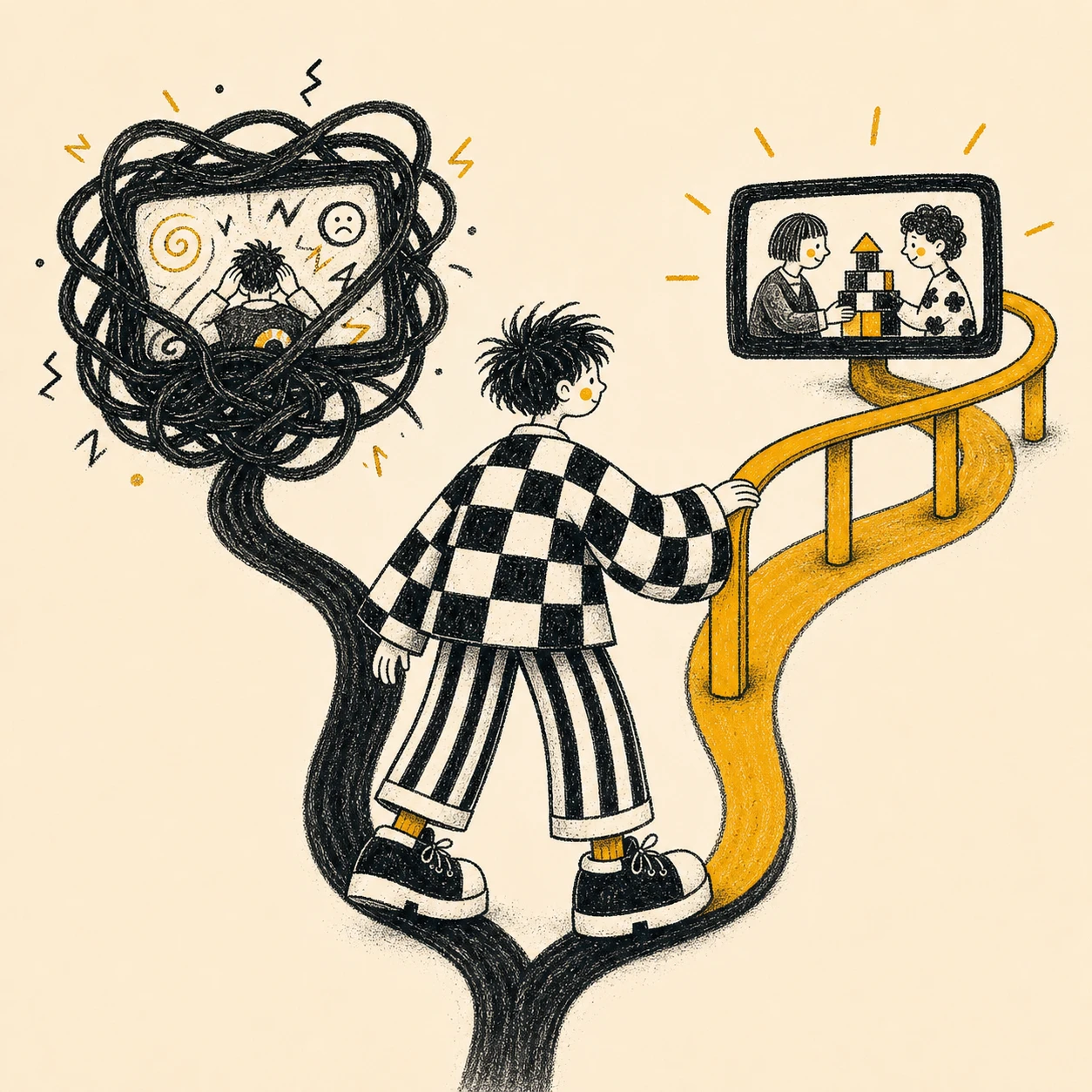
This review looks at phones, tablets, games, videos, and social media for children with ADHD or tic disorders. It says screen use is not simply good or bad, because the type of activity and when it happens matter a lot.
Goal
The authors wanted to know whether screens should always be avoided or managed in a more careful way.
Method
They searched medical research papers about ADHD, tic disorders, and screen use, then summarized the stronger and more relevant studies.
Findings
Too much or poorly managed screen use was tied to worse symptoms and sleep, but some active or therapeutic tools may help when supervised. The evidence is mixed and not always causal.
Practical advice
Choose active, age-appropriate screen activities, keep screens away from bedtime, and watch whether symptoms or sleep worsen. Do not assume every ADHD app is useful just because it looks therapeutic.
_______________
Electronic Product Use in Children With Tic Disorders and ADHD
2025-10-21
How maternal obesity may relate to children’s attention and development

This review looks at whether obesity before or during pregnancy is linked with children’s later thinking, attention, and behavior. It finds links with ADHD-like symptoms, but not simple proof of cause and effect.
Goal
The authors wanted to see how maternal obesity might connect to children’s later brain and behavior development.
Method
They combined evidence from many study types, including human cohorts and animal studies. The review checked study quality and looked for patterns across cognitive, executive, and behavioral outcomes.
Findings
Children exposed to maternal obesity showed more risk for attention, behavior, and learning difficulties across studies. The evidence points to several possible biological routes, but measurement limits make the exact pathway uncertain.
Practical advice
Healthy pregnancy support and child development check-ins can matter, but this review should not be used to blame parents. It shows risk patterns, not destiny.
_______________
Neurodevelopmental Pathways from Maternal Obesity to Offspring Outcomes: An Umbrella Review of Cognitive and Behavioral Consequences Across Development
2025-10-21
Why children’s headaches can involve attention, mood, sleep, and school

This paper looks beyond headache pain in children. It shows that headaches can come with mood, sleep, attention, learning, and school problems, including ADHD-related concerns.
Goal
The authors wanted to understand what else children with primary headaches may struggle with besides pain.
Method
They searched major databases for studies about children’s primary headaches and mental or cognitive outcomes. Treatment-only papers and adult-only studies were excluded.
Findings
Children with headaches often had more than pain alone. Attention, planning, sleep, mood, memory, and school participation were common areas to check.
Practical advice
If a child has repeated headaches, ask how sleep, attention, mood, and school are going too. A coordinated plan can catch problems that pain scores miss.
_______________
Beyond the Pain: A Critical Examination of the Psychopathological and Neuropsychological Dimensions of Primary Headaches in Pediatric Populations
2025-10-21
Why ADHD Care Differs by Place in Denmark

The researchers checked whether Danish children get ADHD diagnoses and medicine at similar rates across the country. They found big place-to-place differences that the measured system factors did not explain well.
Goal
The researchers wanted to see whether where a child lives in Denmark changes how often ADHD is diagnosed or treated.
Method
They used Denmark's national health records to count ADHD diagnoses and medicine use in each area, then compared those counts with local resources and waiting times.
Findings
Some Danish areas had many more children with ADHD diagnoses or medicine than others. The study could not tell exactly why, because some important information was missing.
Practical advice
Do not assume one town is doing ADHD care right and another is doing it wrong. The useful next step is to look closely at how children move through local help, diagnosis, and treatment.
_______________
Regional Variation in ADHD Treatment and Diagnosis in Denmark
2025-10-21
A Safe ADHD Chatbot Framework for Nurses and Clinics

The paper is a Viewpoint that suggests ADHD chatbots can help children and teens between visits, but only with strong safety rules. It recommends nurse-led teams, age-safe design, clear danger levels, and ongoing monitoring so the tools improve care without causing new harms.
Goal
The paper asks what rules are needed before ADHD chatbots are used widely with young people.
Method
The author reviews ADHD care and AI safety guidance, names the biggest gaps, and builds a rollout model with risk levels and outcomes to track.
Findings
The plan highlights safety, fairness, staffing, payment, and data problems that could make chatbot care risky. It offers a structure, but it has not yet proved that the structure works.
Practical advice
Start with small supervised pilots, not broad unsupervised chatbot use. Keep a human care path, privacy checks, and clear stop rules until real-world data show the tool is safe and useful.
_______________
Safely Integrating AI Powered Therapy Chatbots Into ADHD Care
2025-10-20
Using the 30% Rule for Kinder ADHD Expectations

This paper says ADHD is not just bad behavior. It suggests adults should expect some executive-skill delays and respond with kinder, more realistic support.
Goal
The author wanted to explain how adults can adjust expectations for children with ADHD.
Method
The author reviewed ideas from ADHD psychology, humanistic teaching, and behavior support, then organized them around the 30% rule.
Findings
The paper says ADHD can make self-control and time skills younger than a child's actual age. Calling the child lazy or badly raised can make things worse.
Practical advice
Expect skills to need extra support, break tasks down, and avoid shaming the child. Use the idea as a guide, not a diagnosis or treatment plan by itself.
_______________
ADHD Parental Approach, the 30% Rule, and Rehabilitation Technologies
2025-10-20
How Students Managed Public Speaking E-Portfolios

This paper studies students making online portfolios for a speaking class. They struggled with technology, time, and design, but support from peers and lecturers helped.
Goal
The researchers wanted to know what made e-portfolios hard and what helped students complete them.
Method
They watched the class, interviewed some students, and looked at portfolio work to find common themes.
Findings
Students had trouble knowing what to make, getting online, managing deadlines, and making pages look good. They improved by asking classmates, watching tutorials, planning tasks, and using teacher feedback.
Practical advice
For class projects like this, clear examples, smaller steps, tech help, and peer feedback can make the work less overwhelming.
_______________
Indonesian Students' E-Portfolio Strategies in Public Speaking Courses
2025-10-20
Social Media, FOMO, and Putting Off Schoolwork

Students who felt more hooked on social media also tended to put off schoolwork more. The paper says low self-control and FOMO may be part of why this happens.
Goal
The researchers wanted to see why social media overuse might go along with delaying schoolwork.
Method
They asked Chinese college students to fill out online questionnaires, then checked how the answers were connected.
Findings
Students with more social media problems were more likely to delay schoolwork. Low self-control and FOMO helped explain the pattern, but the study cannot prove cause and effect.
Practical advice
For students who keep delaying work, it may help to set social media limits, practice self-control, and reduce FOMO pressure. The results should be used carefully because they are not causal proof.
_______________
Social Media Addiction, Self-Control, FOMO, and Academic Procrastination
2025-10-18
Tracking Growth and Heart Rate on Methylphenidate

This study followed health measurements for young people taking methylphenidate for ADHD. Weight and height percentiles went down a little, heart-rate percentiles went up, and blood-pressure percentiles stayed about the same.
Goal
The researchers wanted to see which body measurements changed after young people started methylphenidate.
Method
The team compared clinic measurements from before treatment with later checkups, using percentiles so age and growth were considered fairly.
Findings
Children tended to shift lower on growth charts and higher on heart-rate charts, but not blood-pressure charts. Higher doses were linked with more weight percentile drop.
Practical advice
Keep regular height, weight, blood pressure, and heart-rate checks while using methylphenidate. Use patterns over time to guide dose conversations with a clinician.
_______________
Methylphenidate Effects on Growth, Blood Pressure, and Heart Rate in ADHD Youth
2025-10-17
Attention After Heart Rhythm Treatment

Researchers checked whether children had attention or hyperactivity problems after heart rhythm treatment. Most scores were not unusually high, but older children and boys showed more attention trouble.
Goal
The goal was to see if heart rhythm treatment was linked with attention and behavior signs in children.
Method
Parents filled out behavior ratings for children who had already had ablation therapy. The researchers compared scores by sex and age.
Findings
A few children scored high for attention or hyperactivity signs. The study cannot prove the procedure caused these signs because it only looked at children once.
Practical advice
After heart treatment, adults can watch how a child is focusing at home and school. These results do not mean the treatment caused ADHD.
_______________
ADHD Symptoms in Children Undergoing Ablation Therapy
2025-10-17
Brain Folding and Early ADHD Treatment Response in Adults

This paper asks whether the shape of the brain surface can hint at how adults with ADHD respond to treatment. The links were interesting, but they still need more testing before doctors can use them.
Goal
The researchers wanted to know whether brain folding before treatment could predict who improves afterward.
Method
They scanned adults with ADHD before treatment, tracked symptoms for 12 weeks, and tested whether folding in different brain areas matched later symptom changes.
Findings
Some brain-folding patterns lined up with symptom improvement, and different regions mattered for different treatments. The study is promising but still early.
Practical advice
Brain scans should not choose ADHD treatment yet. Use regular symptom tracking and treatment check-ins while scientists test whether these markers hold up.
_______________
Cortical Gyrification Predicts Initial Treatment Response in Adults With ADHD
2025-10-17
ADHD Care That Tracks Hormone Changes

This paper says ADHD symptoms can change across periods, after pregnancy, and during menopause. It explains that tracking these changes can help clinicians understand why focus, mood, sleep, or medication effects may feel different at different times.
Goal
The authors wanted to make a practical checklist for ADHD care that includes hormone-related symptom changes.
Method
The team used their clinic experience and searched the research literature about ADHD, women, hormones, cycles, menopause, diagnosis, and treatment.
Findings
The paper found that the research base is still small, but several sources point to worse symptoms around low or changing estrogen phases. The care plan is promising, but it still needs more testing.
Practical advice
Track symptoms, sleep, periods, and medication effects together before changing treatment. Bring the pattern to a clinician instead of guessing alone, because the evidence is useful but still early.
_______________
Practical Tools for Female-Specific ADHD: Hormonal Fluctuations in Clinical Practice
2025-10-17
How ADHD Medicine Use Is Changing Around the World

The paper looked at many countries to see how often ADHD medicines are being used. Use has mostly gone up, especially for teens, adults, and girls or women, but safe and fair access still needs watching.
Goal
The authors wanted to see where ADHD medicine use is rising and who is using it most.
Method
They searched medical papers and public drug registers, kept studies that tracked ADHD medicine use over time, and compared rates across countries, ages, and sexes.
Findings
Most places showed more ADHD medicine use over time. The clearest rises were in teens, adults, and females, but the studies were hard to compare.
Practical advice
Make medicine easier to get for people who need it, but check diagnoses carefully and watch for sharing or misuse. Country comparisons need caution because systems differ.
_______________
Global Trends in ADHD Medication Use
2025-10-16
A Short Exercise for Getting Started When You Are Procrastinating

This paper is about getting unstuck from a task you are avoiding. A quick planning exercise made starting feel more doable.
Goal
The researchers wanted to see if a short exercise could help people feel ready to start an avoided task.
Method
People answered questions about a task they were avoiding. Some also broke it into a small next step and picked a small reward.
Findings
The exercise helped people feel more likely to begin and made the task feel more worthwhile. It did not prove that people actually finished the task.
Practical advice
When stuck, pick one small first step and a simple reward. Add reminders or another person checking in if starting is still hard.
_______________
Now I Feel Like I'm Going to Get to It Soon: A Brief, Scalable Intervention for State Procrastination
2025-10-16
Using Praxis Skills to Support a Child With Developmental Needs

This article is about one child with several developmental challenges, including possible ADHD. It shows how therapists can plan support by looking at movement, senses, communication, and emotions.
Goal
The author wanted to match one child's needs with better supports.
Method
The author reviewed one child's therapy history and behaviors, then grouped his strengths and challenges into praxis skill areas.
Findings
The child improved in some skills but still needed help with speaking, movement planning, emotions, and changes in routine.
Practical advice
Pick supports that match the child, keep routines clear, and practice small skills often across home and school.
_______________
Praxis as a Framework for Intervention: The Case of Alan
2025-10-16
How ADHD Medicines, Stimulants, and Opioids May Affect Driving

This broad review asks how ADHD medicines, other stimulants, party drugs, and opioids may change driving skills. Prescribed stimulants can help some ADHD drivers, while misuse, mixing substances, or certain opioids can make driving riskier.
Goal
The authors wanted to see which substances change driving skills in adults.
Method
They gathered adult driving studies from major medical databases, sorted them by substance, and checked study quality.
Findings
ADHD stimulant treatment often helped driving control, while higher-risk drug use and some opioids often made attention or coordination worse.
Practical advice
Do not assume a medicine is safe for driving just because it is prescribed; check timing, dose changes, sleepiness, and substance mixing.
_______________
Review of Selected 2-Phenylethylamine Derivatives and Opioids, Systematic Review of Their Effects on Psychomotor Abilities and Driving Performance: Psychopharmacology in the Context of Road Safety
2025-10-16
Do ADHD Medicines Work Differently for Males and Females?

This review asks whether ADHD medicines can feel or work differently for boys, girls, men, and women. It says there are clues that sex and hormones matter, but the evidence is still patchy.
Goal
To see whether ADHD treatment should pay more attention to sex and hormone-related differences.
Method
The authors compared published human studies, animal studies, safety reports, and real therapy examples about common ADHD medicines.
Findings
Some people may respond differently by sex or hormone stage, but many studies are too small or incomplete to be sure.
Practical advice
Track how medicine feels across time, symptoms, and side effects, then adjust carefully with a clinician.
_______________
Sex Differences in the Response to Treatment of Attention Deficit Hyperactivity Disorder
2025-10-15
Testing a Clearer Way to Choose ADHD Medicine Doses

Researchers tested real medicine days against look-alike placebo days while doctors adjusted doses. This helped families see who truly needed methylphenidate.
Goal
The study asked whether a fairer medicine test could help doctors choose doses.
Method
Half the children tried a structured plan with placebo weeks and increasing doses, while the other half had regular dose adjustments.
Findings
The structured test helped identify more children who could stop medicine. Those who stayed on medication did about as well as usual-care children.
Practical advice
A planned medicine trial can help families and doctors decide whether methylphenidate is really helping. Adults need to track behavior and side effects carefully.
_______________
Improving Methylphenidate Titration in Children With ADHD: A Randomized Controlled Trial Using Placebo-Controlled Titration Implemented in Clinical Practice
2025-10-15
A Late Gene Test Helped Change Diabetes Treatment

A man had diabetes from babyhood because of a gene change, but doctors found the cause only when he was a teenager. Changing medicine helped blood sugar, though learning and movement problems did not clearly improve.
Goal
They wanted to show why finding the genetic cause can still matter years after symptoms begin.
Method
They followed the patient's medical story and tested his DNA for a diabetes-related gene change.
Findings
The gene test found a likely disease-causing change. Pill treatment helped blood sugar, but it did not undo the existing brain and development problems.
Practical advice
When diabetes starts in a very young baby, ask whether a gene test is needed. The answer can point to simpler medicine, but specialists should supervise the switch.
_______________
Case Report: When Genetic Diagnosis Comes Late: Lessons From a DEND Syndrome Patient Successfully Transitioned to Sulfonylurea
2025-10-14
ADHD diagnosis today: old clinical tools and newer digital assessment methods

The paper reviews how ADHD is diagnosed and asks whether newer tools can make the process more accurate. It looks at studies using virtual reality, computer-based attention tasks, eye tracking, EEG, and AI, and reports that these approaches can sometimes add useful information when layered on top of standard clinical assessment.
Goal
The authors wanted to know whether VR tests and AI-based analysis can strengthen standard ADHD evaluation across ages.
Method
They reviewed peer-reviewed ADHD studies from 2014 to 2025, screened studies systematically, and compared questionnaires, CPT tests, VR tasks, eye-tracking, EEG, movement tools, and ML models.
Findings
Classic clinical questionnaires and interviews are still the core of diagnosis, while digital tools can add measurable information. The strongest signals often came from small or narrow samples, so the field still needs broader replication.
Practical advice
These tools can help teams spot patterns, but they should support interviews, teacher or parent information, and clinical judgment. Use them cautiously until stronger large-scale validation is available.
_______________
ADHD Diagnostic Tools Across Ages: Traditional and Digital Approaches
2025-10-12
Correction Notice for a Pregnancy and ADHD Risk Paper

This is not a new ADHD study. It is a correction note that fixes missing author-credit information for an earlier pregnancy and ADHD-risk paper.
Goal
The journal wanted to fix who should be credited as equal contributors.
Method
The notice points to the original article and states the missing credit line that should have appeared.
Findings
The only change is about author credit. It does not change the study's data or conclusions.
Practical advice
Do not use this correction as a research finding. Read the original paper if you want the actual pregnancy and ADHD-risk results.
_______________
Correction: Maternal Thyroid Dysfunction, Stress, and Preschool ADHD Risk
2025-10-11
How ADHD brains and treatment choices change from childhood to older age

This paper reviews ADHD science across age groups. It explains that ADHD is linked to control circuits and chemical messengers like dopamine, and it shows that treatment should adjust as people grow.
Goal
The author asks whether ADHD brain mechanisms can guide treatment choices for children, teens, adults, and older adults.
Method
The author reviewed existing ADHD papers, grouped them by age range, and compared medication and non-drug treatments by benefit and side-effect concerns.
Findings
The review finds stronger support for stimulant medication overall, with limited age-specific evidence in some groups. Newer options such as dTMS and music training look early-stage rather than standard replacements.
Practical advice
Choose treatment for the whole person, not just the diagnosis. Start with better-supported approaches, monitor symptoms and side effects closely, keep daily structure supports in place, and be cautious with newer options.
_______________
A Review of the Neurobiological Mechanisms and Treatment Options of ADHD Across Different Age Groups
2025-10-07
How ADHD symptoms and age affect memory slips and emotional control in men and women

Adults answered questionnaires about ADHD symptoms, daily cognitive mistakes, and emotional regulation. Across men and women, higher ADHD scores were linked with more everyday complaints, and in men some links were slightly weaker at older ages while women's links were mostly similar.
Goal
Do ADHD symptoms relate to cognitive and emotional complaints differently as people age, and do men and women show different age patterns?
Method
Adults from a community sample completed ADHD, cognitive, and emotion-regulation questionnaires online. The analysis separated men and women and tested whether age changed each symptom-to-complaint link.
Findings
People with more ADHD symptoms reported more cognitive and emotional problems. In men, age seemed to soften some links with age, especially for impulse control and cognitive complaints; women showed fewer age-related changes.
Practical advice
Use ADHD symptom levels as a prompt for practical supports, but treat reported age and gender differences as tentative until larger, long-term studies confirm how these patterns hold up over time.
_______________
Age-related cognitive complaints and emotional difficulties associated with symptoms of ADHD: a study of gender differences
2025-10-01
Why students who control themselves better procrastinate less

The study found that students who regulate themselves better are less likely to delay homework and deadlines. Students with weaker self-control tended to put college work off more.
Goal
To see if students with stronger self-control procrastinate less on college work.
Method
Students answered two questionnaires: one on self-control and one on procrastination. The researchers checked the data and tested whether the two scores moved in opposite directions.
Findings
Most students were in the middle for both self-control and procrastination. The more self-control students reported, the less they postponed school tasks.
Practical advice
Try planning each day, setting priorities, reducing distractions, and practicing small daily self-control habits to reduce last-minute rushing.
_______________
The Relationship Between Self-Control and Academic Procrastination Among Students
2025-09-29
How Much University Students Know About ADHD

The study asked students what they know about ADHD. Many knew some facts, especially healthcare students, but fewer could recognize symptoms well, and many still believed incorrect things such as ADHD being diagnosable with a blood test.
Goal
They wanted to see whether university students understand ADHD facts and symptoms, and whether healthcare students know more than other students.
Method
Students filled out an online survey about ADHD facts, symptoms, school background, grades, and information sources. The researchers compared healthcare and non-healthcare students and looked for patterns in the answers.
Findings
Healthcare students knew more ADHD facts, but both groups missed many practical recognition points. A lot of students had mistaken ideas, especially about diagnosis, and students relying on weaker information sources tended to score lower.
Practical advice
Universities can teach ADHD more clearly with real examples, short workshops, reliable online materials, and official campaigns. The goal is to replace myths with practical recognition and support.
_______________
Bridging the Gap: A Cross-Sectional Study on Knowledge and Awareness of Attention-Deficit/Hyperactivity Disorder Among Students at a Public University
2025-01-01
A Writing Helper for Planning and Checking Your Work

This paper describes a study tool for college writing. Students wanted help making goals, managing stress, planning time, and looking back at their work.
Goal
The researchers wanted to build and test a tool that helps students plan, write, and learn from feedback.
Method
Students shared what makes writing hard, and the team used those answers to design tool features. A small group then tried the first version.
Findings
Many students did not have clear writing plans and felt overwhelmed. The first tool test worked, but people still needed a little help using it.
Practical advice
A writing support tool should be easy to start, connected to real assignments, and helpful for breaking work into smaller steps. It still needs stronger testing.
_______________
A Digital Tool to Support Self-Regulated Learning in Academic Writing
2025-01-01
How Upset Feelings May Connect ADHD and Sadness

The study looked at why some kids with ADHD later seem more sad. Two trouble spots stood out: big worst-case feelings and getting thrown off task when emotions are high.
Goal
The researchers wanted to find which feeling-management problems sit between ADHD traits and later low mood.
Method
They used parent questionnaires from a large U.S. child study and mapped how ADHD, emotion, and depression items connected over several years.
Findings
Kids who lost focus when upset and kids who felt overwhelmed showed different routes from ADHD traits to later sad feelings. The pattern is useful, but it is not proof of cause.
Practical advice
Watch what happens when feelings get big, not only whether a child pays attention or sits still. Bring those patterns into support conversations instead of treating them as a diagnosis by themselves.
_______________
Emotion Regulation Links ADHD and Depression Symptoms in ABCD Youth
2025-01-01
Why English Teachers Put Some Work Off

The study asked English teachers in Croatia when and why they put work off. Most felt capable, but paperwork, grading, heavy workload, and hard tasks made delay more likely.
Goal
The researchers wanted to know what makes language teachers delay work.
Method
Teachers filled out surveys about confidence, worry, and delaying tasks, then explained what they tend to postpone and how it feels.
Findings
Teachers who felt more capable tended to delay less. The hardest-to-start jobs were forms, reports, grading, and confusing or unsupported tasks.
Practical advice
Give teachers fewer pointless forms, clearer help for hard tasks, fairer workloads, and mentoring so difficult work feels more manageable.
_______________
Uncovering Procrastination in Language Teaching: Self-Efficacy, Anxiety, and Situational Influences
2021-02-04
World Federation ADHD Consensus Statement

This statement gathers strong ADHD evidence to answer common myths. It says many important ADHD facts are backed by large studies.
Goal
They wanted to replace ADHD myths with well-supported facts.
Method
They only used large studies or strong meta-analyses, then had many ADHD experts check the statements.
Findings
They ended with 208 evidence-backed statements about ADHD and why misinformation can delay help.
Practical advice
Use it to check ADHD claims, but use clinical guidelines for personal care decisions.
_______________
The World Federation of ADHD International Consensus Statement: 208 Evidence-based conclusions about the disorder
2019-09-30
AAP ADHD care guideline update

This guideline updates how pediatric clinicians should handle ADHD care. It mostly keeps earlier advice, while adding more focus on other conditions that can come with ADHD.
Goal
The authors wanted to refresh ADHD guidance for children and teens.
Method
A guideline group updated earlier ADHD advice using newer research and DSM-5.
Findings
The old guidance mostly still fit. The update added more help for handling other conditions and real-world care barriers.
Practical advice
Use it as a roadmap for ADHD care in children and teens, while remembering that clinics may need better systems to follow it well.
_______________
Clinical Practice Guideline for the Diagnosis, Evaluation, and Treatment of Attention-Deficit/Hyperactivity Disorder in Children and Adolescents
2018-11-23
First Genome-Wide ADHD Risk Loci

This large genetics study found the first strong ADHD risk locations in the genome. It also linked ADHD genetics to brain and developmental biology.
Goal
They wanted to scan the genome for common DNA differences linked with ADHD.
Method
They combined DNA data from many cohorts and looked for genetic variants that appeared more often in ADHD cases.
Findings
They found 12 strong genetic locations. The pattern suggested many small genetic influences, not one simple cause.
Practical advice
These findings help research, but they cannot diagnose one person or say destiny is fixed.
_______________
Discovery of the first genome-wide significant risk loci for attention deficit/hyperactivity disorder
2018-08-07
Comparing ADHD medicines across ages

This big review compared ADHD medicines across age groups. Short-term evidence favored methylphenidate for younger people and amphetamines for adults.
Goal
The paper wanted to compare which ADHD medicines help and how tolerable they are at different ages.
Method
They combined many blinded medicine trials and compared medicines directly and indirectly.
Findings
Several medicines helped short term, but the best-supported first choices differed by age and long-term evidence was thin.
Practical advice
It can guide medicine conversations, but the right choice still depends on the person and careful monitoring.
_______________
Comparative efficacy and tolerability of medications for attention-deficit hyperactivity disorder in children, adolescents, and adults: a systematic review and network meta-analysis
2018-06-11
What genetics says about ADHD

This review explains how genes contribute to ADHD. It says ADHD risk is shared across many genetic factors, not caused by one simple ADHD gene.
Goal
They wanted to explain what genetic research can and cannot tell us about ADHD.
Method
The authors reviewed many kinds of genetics studies instead of collecting a new group of participants.
Findings
ADHD often runs in families, but no single gene explains it. Many small genetic differences, plus some rare ones, seem to add risk.
Practical advice
Genes matter for ADHD, but they do not decide everything. A genetic result cannot replace careful assessment and support.
_______________
Genetics of attention deficit hyperactivity disorder
2017-10-12
ADHD prevalence and care pathways

This review says ADHD is fairly common, but care does not reach children evenly. Who gets diagnosed depends on awareness, local services, age, sex, and how families move through the system.
Goal
The paper wanted to link ADHD numbers with real-world care routes for young people.
Method
The authors reviewed many papers about ADHD rates, costs, access barriers, guidelines, preschool care, and the move into adult services.
Findings
About one in twenty children may meet ADHD criteria, but many are missed. Girls, older children, and young adults moving services can fall through gaps.
Practical advice
Do not judge a service by diagnosis numbers alone. Check whether children can actually move from concern to assessment, support, treatment, and adult care.
_______________
ADHD in children and young people: prevalence, care pathways, and service provision
2014-01-24
ADHD prevalence across three decades

This review asks whether ADHD became more common over time. It found that study methods mattered more than the year.
Goal
They wanted to know if ADHD rates truly rose over time.
Method
They updated earlier reviews and used meta-regression to compare study features.
Findings
Differences between studies mostly came from methods, not a true rise over time.
Practical advice
Before saying ADHD is more common now, check how each study counted it.
_______________
ADHD prevalence estimates across three decades: an updated systematic review and meta-regression analysis
2013-11-21
U.S. parent-reported ADHD trends

This survey paper tracked ADHD diagnosis and medication trends in U.S. children. Parent reports showed more diagnosed and medicated ADHD by 2011.
Goal
The paper wanted to track how ADHD diagnosis and medication reports changed over time in the U.S.
Method
They compared parent survey answers from three national survey waves.
Findings
More children had an ADHD diagnosis in 2011 than in 2003, and more were taking medication than in 2007.
Practical advice
Use the trends to plan services, but remember they come from parent reports and changing diagnosis patterns.
_______________
Trends in the Parent-Report of Health Care Provider-Diagnosed and Medicated Attention-Deficit/Hyperactivity Disorder: United States, 2003–2011
2012-07-01
How common DSM-IV ADHD is

This review asks how many people meet DSM-IV ADHD criteria. Different studies varied, but the pooled estimates were closer than many single studies suggest.
Goal
The review tried to count ADHD rates and see what changed those rates.
Method
The author combined 97 studies covering children, teens, and adults.
Findings
ADHD rates were around 6% to 7% for children and teens and about 5% for young adults.
Practical advice
Use it as an older benchmark, and be careful when comparing it with newer diagnostic rules.
_______________
The Prevalence of DSM-IV Attention-Deficit/Hyperactivity Disorder: A Meta-Analytic Review
2011-10-17
AAP ADHD guideline for children and teens

This pediatric ADHD guideline explains when to evaluate children and teens, how to diagnose ADHD, and how treatment choices change by age.
Goal
It set out to refresh pediatric ADHD guidance.
Method
An AAP guideline group weighed evidence quality against expected benefits and harms.
Findings
It says ADHD care should check symptoms across settings, look for other conditions, and match treatment to the child's age.
Practical advice
Use it as older guidance, then check newer recommendations and the child's actual needs.
_______________
ADHD: Clinical Practice Guideline for the Diagnosis, Evaluation, and Treatment of Attention-Deficit/Hyperactivity Disorder in Children and Adolescents
2009-02-27
How Common Adult ADHD Is

This paper combined studies to estimate adult ADHD rates. It found that the number changes depending on who is studied and how ADHD is defined.
Goal
They wanted a clearer estimate of how many adults have ADHD.
Method
They gathered adult ADHD studies and compared their results while checking age, gender, and diagnosis rules.
Findings
About 2 to 3 adults in 100 met ADHD criteria in these studies, but estimates changed with age and study design.
Practical advice
Use the 2.5% estimate carefully. Ask how ADHD was measured before comparing it with another number.
_______________
Prevalence and correlates of adult attention-deficit hyperactivity disorder: meta-analysis
2007-11-17
ADHD and delayed cortical maturation

This study asked whether brain development in ADHD is delayed or simply different. The MRI data pointed to delay, especially in frontal areas.
Goal
They wanted to know whether ADHD brain growth is late or different.
Method
They measured cortex thickness across many MRI scans and estimated when each area peaked.
Findings
The ADHD group followed a similar order but reached peak thickness about three years later.
Practical advice
The result can explain timing, but support should match the person's current needs.
_______________
Attention-deficit/hyperactivity disorder is characterized by a delay in cortical maturation
2007-06-19
JAACAP ADHD assessment and treatment parameter

This guideline explains how clinicians should assess and treat ADHD in young people. It covers diagnosis, other conditions, medicines, and psychosocial help.
Goal
It aimed to guide clinicians through ADHD assessment and care decisions.
Method
Experts reviewed research and clinical consensus instead of running a new trial.
Findings
Good ADHD care needs assessment, comorbidity checks, and treatment choices that may include medicine and psychosocial support.
Practical advice
Treat it as historical child-psychiatry guidance, then compare it with newer recommendations and the child's actual needs.
_______________
Practice Parameter for the Assessment and Treatment of Children and Adolescents With Attention-Deficit/Hyperactivity Disorder
2007-06-01
How Common ADHD Is Worldwide

This review found that ADHD rates look different across studies mostly because studies measure ADHD differently.
Goal
They wanted to know how common ADHD is worldwide and why estimates differ.
Method
They gathered many child prevalence surveys and compared how each one defined and measured ADHD.
Findings
The average estimate was about 5 in 100 children, and study design explained much of the spread.
Practical advice
When you see an ADHD rate, first ask how the study counted ADHD.
_______________
The Worldwide Prevalence of ADHD: A Systematic Review and Metaregression Analysis
2007-04-30
Adult ADHD across ten countries

This study asked how common adult ADHD was in ten countries. It found adult ADHD was not rare and was often tied to other problems and unmet care.
Goal
They wanted a better cross-country count of adult ADHD and what tends to come with it.
Method
Survey teams interviewed adults in ten countries, then used a smaller clinical check to make the ADHD estimates more realistic.
Findings
About 3 in 100 adults met the study's ADHD estimate, but rates differed by country. People with adult ADHD often had other mental health issues and were not usually treated for ADHD itself.
Practical advice
Use it to understand adult ADHD at a public-health level, not to diagnose one person. The estimates depend on survey methods and memory of childhood symptoms.
_______________
Cross-national prevalence and correlates of adult attention-deficit hyperactivity disorder
2006-04-01
Adult ADHD in the United States

This U.S. survey paper estimated adult ADHD. It found adult ADHD was common, impairing, and often not treated as ADHD.
Goal
The researchers wanted to know how common adult ADHD was in the United States.
Method
They used a national survey, follow-up interviews, and statistics to estimate adult ADHD.
Findings
About 4 in 100 adults met criteria, and many had other disorders or no ADHD treatment.
Practical advice
When adults screen positive, check daily impairment and other mental health needs too.
_______________
The Prevalence and Correlates of Adult ADHD in the United States: Results From the National Comorbidity Survey Replication
2005-04-12
Testing the Executive-Function Theory of ADHD

This review checked whether ADHD can mostly be explained by executive-function problems. It found real weaknesses, but not in a way that explains every case.
Goal
They wanted to know if executive-function trouble is the main reason ADHD happens.
Method
They combined many studies that tested attention, inhibition, memory, planning, and related skills in ADHD and comparison groups.
Findings
People with ADHD often struggled more on these tasks, especially stopping responses, staying alert, remembering information, and planning. The pattern was real but not the whole story.
Practical advice
Executive-function tests can help, but they should not be treated as the single test for ADHD.
_______________
Validity of the Executive Function Theory of Attention-Deficit/Hyperactivity Disorder: A Meta-Analytic Review
2005-02-01
Computer working-memory training trial

This trial tested computer working-memory training for children with ADHD. The trained group improved on memory tasks and some related skills.
Goal
They wanted to know whether memory training would help beyond the game itself.
Method
Children used either adaptive training or a comparison program, then took memory and behavior-related tests.
Findings
The training group improved on memory, inhibition, reasoning, and parent-rated ADHD symptoms.
Practical advice
It is promising early evidence, but it should not replace regular ADHD support.
_______________
Computerized Training of Working Memory in Children With ADHD-A Randomized, Controlled Trial
2005-01-25
ADHD Molecular Genetics

This review explains why ADHD genetics are real but complicated. It points to many small genetic clues, not one ADHD gene.
Goal
They wanted to summarize what genetics research had found about ADHD risk.
Method
They reviewed several kinds of genetics studies instead of running a new study.
Findings
ADHD looked highly heritable, but each gene signal was small. Several candidate genes looked promising, while genome-wide results were not settled.
Practical advice
It is useful background, not a way to predict one person's ADHD from genes.
_______________
Molecular Genetics of Attention-Deficit/Hyperactivity Disorder
2005-01-21
A Short Adult ADHD Screening Scale

This paper tested an adult ADHD questionnaire. The short six-question version worked better than the longer unweighted version.
Goal
They wanted to see how well a short questionnaire matched clinical ADHD interviews.
Method
They compared questionnaire answers from 154 adults with independent clinical ratings.
Findings
Some questions matched interviews better than others, and the short screener performed best in this sample.
Practical advice
The short screener can flag people for follow-up, but it cannot diagnose ADHD by itself.
_______________
The World Health Organization adult ADHD self-report scale (ASRS): a short screening scale for use in the general population
2002-10-09
How ADHD Brain Volumes Change During Growth

This study looked at brain scans of young people with ADHD over time. The main message was that some brain-volume differences were present and mostly stayed on a similar growth path.
Goal
They wanted to know whether ADHD-related brain-size differences changed as children got older.
Method
They compared many MRI brain scans from young people with ADHD and similar young people without ADHD.
Findings
The ADHD group had smaller volumes in several brain areas, and most differences did not simply disappear with age.
Practical advice
Do not use brain scans alone to judge one child. Use this as background when thinking about ADHD biology.
_______________
Developmental Trajectories of Brain Volume Abnormalities in Children and Adolescents With Attention-Deficit/Hyperactivity Disorder
2002-09-01
Training working memory in ADHD

This study tested computer-style working memory practice for children with ADHD. Practice helped some thinking tasks and reduced movement during one test.
Goal
They wanted to know if working memory can be trained instead of treated as unchangeable.
Method
Children with ADHD practiced memory tasks in a blinded comparison, and another experiment tested young adults without ADHD.
Findings
Practice improved more than just the practiced tasks. The trained children also moved less during one computerized test.
Practical advice
Memory training may help some skills, but one early study is not enough to promise everyday ADHD improvement.
_______________
Training of Working Memory in Children With ADHD
2002-08-01
Searching for ADHD brain markers

This review looks for measurable traits between ADHD symptoms and brain biology. It focuses on reward timing, time processing, and working memory.
Goal
They wanted better measurable clues for why ADHD happens.
Method
They compared many kinds of ADHD evidence instead of running a new study.
Findings
The best candidate clues involved reward delay, inconsistent timing, and working memory.
Practical advice
Use it for understanding possible mechanisms, not for diagnosing someone.
_______________
Neuroscience of attention-deficit/hyperactivity disorder: the search for endophenotypes
1999-12-01
Four ADHD Treatments Compared for 14 Months

This trial compared four ADHD treatment plans. Medication-focused care and combined care helped core symptoms most over 14 months.
Goal
The researchers wanted to compare common ADHD treatment strategies over more than four months.
Method
Children were assigned to one of four treatment paths and followed for 14 months.
Findings
Medication care helped core ADHD symptoms most; adding behavioral care helped some other life areas.
Practical advice
Medication may help symptoms, while behavior supports can still help family, school, and social goals.
_______________
A 14-Month Randomized Clinical Trial of Treatment Strategies for Attention-Deficit/Hyperactivity Disorder
1997-01-01
A Theory of ADHD and Self-Control

This review says ADHD may start with trouble stopping or pausing actions, which then affects several thinking and self-control skills.
Goal
The author wanted one model that connects stopping, attention, and self-control in ADHD.
Method
He built a theory and checked existing ADHD evidence against its main parts.
Findings
The best support was for stopping, working memory, motivation, and movement-control problems, but the theory still needed testing.
Practical advice
Use it to understand ADHD supports broadly, not to decide whether one person has ADHD.
_______________
Behavioral inhibition, sustained attention, and executive functions: Constructing a unifying theory of ADHD
1993-06-01
Testing the Wender Utah Rating Scale

This study tested a questionnaire adults fill out about their childhood behavior. It helped distinguish adults with ADHD from two comparison groups.
Goal
They wanted a better way to ask adults about possible ADHD signs from childhood.
Method
They gave the questionnaire to three adult groups and checked which questions best separated them.
Findings
A score of 46 or higher did a good job sorting the groups, though it was not perfect.
Practical advice
The questionnaire can help, but it should not be the only reason someone gets diagnosed.
_______________
The Wender Utah Rating Scale: an aid in the retrospective diagnosis of childhood attention deficit hyperactivity disorder
Why busy high schoolers may put off schoolwork

The paper asks whether students with hard classes and many activities put off homework more. Many students reported last-minute work, especially when their schedules felt overloaded.
Goal
Check if being very busy with classes and activities makes students put off schoolwork more often.
Method
Students filled out a questionnaire, and students and teachers also joined interviews so the author could compare patterns across sources.
Findings
Most students said they sometimes wait until the last minute. The pattern appeared stronger among students with many hard classes plus clubs or sports.
Practical advice
Use a planner, ask for help early, and make small study plans. Avoid stacking endless classes and activities without support.
_______________
Correlation Between Academic Procrastination and Extracurricular Activities on High School Students
Brain feedback training for self-regulation

This short paper explains neurofeedback, where brainwave signals become simple sounds or pictures so people can practice focus and calm. It mentions ADHD, but it is not a new experiment.
Goal
The author wanted to explain how brain-feedback training might help people practice focus and regulation.
Method
The paper describes an EEG setup where people get immediate feedback and learn to repeat helpful brain patterns. It does not describe a study sample.
Findings
The article says neurofeedback may help attention, stress, sleep, pain, and performance. Because it is only an overview, it does not prove how well it works.
Practical advice
Try neurofeedback only with qualified support and keep tracking daily-life changes. Do not drop proven ADHD supports because of this short paper.
_______________
Neurofeedback: A Non-Invasive Approach to Brain Self-Regulation and Its Applications
How late-night social media might relate to feeling tired at school

From the available text, this paper looks at students using social media before bed and finds one small link with feeling worse during the day.
Goal
They asked whether late scrolling relates to sleep problems.
Method
Participants answered survey questions, and the researchers checked whether higher social media scores went with worse sleep-related scores. The visible extract reports correlation tests, not an experiment.
Findings
Students who used social media more before bed were a little more likely to report low daytime energy. Other shown sleep links did not reach significance, and part of the result set is missing.
Practical advice
If late-night scrolling seems tied to tired days, try a simple no-phone bedtime routine. The study only shows a weak link, so do not treat it as proof.
_______________
Not reported (pre-sleep social media use and sleep-related outcomes)
How sleep problems and ADHD affect each other

The chapter explains that ADHD and sleep problems can feed into each other. Not getting enough sleep may worsen ADHD symptoms, and ADHD can make good sleep harder.
Goal
Explain why ADHD and sleep problems often happen together, and what can help diagnose and treat both.
Method
The chapter pulls together existing research and clinical tools rather than running one new study.
Findings
Short sleep can worsen ADHD symptoms, and ADHD can disturb brain systems that control sleep. Common sleep problems include insomnia, delayed sleep timing, restless legs, and sleep apnea.
Practical advice
Keep a consistent sleep routine, cut screens and caffeine at night, review ADHD medication timing, and ask clinicians to check sleep problems with standard tools when needed.
_______________
Sleep and ADHD
What workers know about ADHD and autism at one big company

Most employees had heard of ADHD and autism and felt fairly open to neurodivergent coworkers. Still, many mixed up some facts and felt the workplace needed better support.
Goal
Find out what coworkers know, how comfortable they are, and what would help them support people with ADHD or autism better at work.
Method
A one-time anonymous online survey was sent to employees, and answers were summarized with percentages and averages.
Findings
People knew the condition names, but still mixed up some symptoms. Many felt comfortable with neurodivergent coworkers, yet most thought workplaces were not adapted enough.
Practical advice
Teach staff the basics correctly and make workplaces more flexible through quieter spaces, clear communication habits, and ongoing support systems.
_______________
A survey of knowledge and perceptions of ADHD and autism spectrum disorder in the workplace at a large corporation
